
Capital · Credit Cards · American Express
A $799 Card
That Hands $500 Back.
What The Platinum Card actually costs once the credits are counted, what the fee buys that the credits do not, and the case for not carrying it.
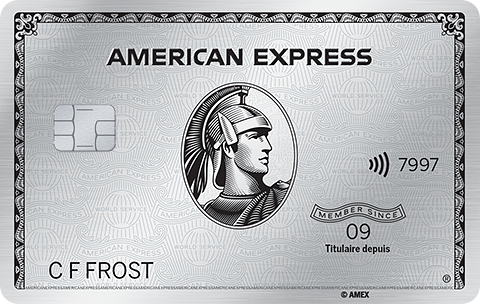
The Platinum Card from American Express is a charge card in Canada with a $799 annual fee. It carries a $200 travel credit, a $200 dining credit and a $100 NEXUS credit every four years. It earns 2 points per dollar on travel and dining, 1 point on everything else, and includes more than 1,550 airport lounges.
Annual Fee
Canadian dollars, charged up front. Source: American Express.
In Stated Credits
$200 travel, $200 dining, $100 NEXUS every four years.
Travel And Dining
Points per dollar. 1x on everything else.
Lounges
Across 140 countries, cardholder plus one guest.
What The Card Is
The mechanics, before anybody argues about whether it is worth it.
A Charge Card, Not A Credit Card
There is no pre-set spending limit, and the balance is expected in full each month. That is a different product to a credit card with a revolving balance, and it is the single most misunderstood thing about this card.
The Fee
$799 a year. A supplementary Platinum card is $250 each. Two supplementary Gold cards are included at no charge, and each Gold card after that is $50 a year.
The Earn
2 points per dollar on eligible travel, 2 points per dollar on eligible dining and food delivery in Canada, and 1 point per dollar on everything else. Membership Rewards points, which transfer to airline and hotel partners.
Foreign Transactions
American Express does not publish the foreign transaction rate outside the per account disclosure, so no figure appears here. Read your own disclosure rather than a market average.
The Arithmetic On The Fee
Four numbers, in the order they actually hit. This is the only part of a premium card that can be checked rather than argued about.
$200 Travel Credit
Applied to an eligible travel booking of $200 or more, once a year, renewing on the card anniversary. It is used or it is lost, and one booking clears it.
$200 Dining Credit
At eligible restaurants, once per calendar year, which is a different clock to the travel credit. Two credits, two renewal dates, and mixing them up is how people lose one.
$100 NEXUS Credit
Toward the application or renewal fee, once every four years. Real money, but $25 a year amortised, not $100. State it the honest way.
What Is Actually Left
$400 of the fee clears on day one if both annual credits are used. The remaining $399 is what lounge access, hotel status and the insurance have to be worth to you, and that number is personal rather than universal.
What The Remaining $399 Buys
The part that cannot be reduced to a credit, stated as what it is.
Lounges
More than 1,550 airport lounges across 140 countries, for the cardholder and one guest, plus the Priority Security Lane at Toronto Pearson. This is the benefit that scales with how often you fly and is worth nothing if you do not.
Hotel Status
Marriott Bonvoy Gold Elite and Hilton Honors Gold, held for as long as the card is. Gold is upgrades when available and late checkout, not suites and lounge access.
Fine Hotels + Resorts
On eligible bookings: noon check in, a room upgrade, daily breakfast for two and a guaranteed 4pm checkout. Breakfast for two on a multi night stay is the line item that moves the most.
Insurance
Travel medical to $5,000,000 for 15 days, auto rental to $85,000, trip cancellation and interruption at $2,500 each, travel accident $500,000, flight delay $1,000. Coverages have conditions and exclusions, so read the certificate rather than the summary.
The Case Against Carrying It
Same rule as every other page here. If the argument only works in one direction it is an advertisement.
The Credits Are Coupons, Not Cash
A $200 travel credit is worth $200 only if you were going to spend $200 on eligible travel anyway. If it makes you book something you would not have booked, the card sold you a purchase and called it a discount.
Two Different Clocks
The travel credit runs on the card anniversary and the dining credit runs on the calendar year. Miss one and the effective fee jumps by $200 for that year. Premium cards are only good value for people who actually run them.
Amex Acceptance Is Not Visa Acceptance
Coverage in Canada is far better than it was and it is still not universal. A card you cannot use at the till earns nothing at that till, which is why this cannot be the only card in a wallet.
It Is 1x On Almost Everything
Outside travel and dining the earn is one point per dollar. Plenty of no fee cards beat that on groceries and gas. The Platinum is a benefits card that also earns, not an earning card.
The Fee Is Charged Whether You Use It Or Not
Interest is what kills most card math, and this one cannot revolve. The equivalent failure here is $799 leaving the account for a year in which you did not fly, did not use both credits and did not stay in a Marriott.
How It Sits In The Stack
Not advice. What this card is for in a wallet that already has eight others.
It Owns One Job
The rule on the stack page is that each card owns a category rather than competing for the same spend. This one owns travel and the airport, and it is not asked to earn on groceries because it is bad at that and something else is good at it.
The Credits Are Diarised Or They Are Lost
Two credits on two different clocks is an admin task, not a benefit, until it is written down somewhere that reminds you. A premium card that runs on memory is a premium card that quietly costs full price.
A Charge Card Enforces The Rule
No revolving balance means it cannot become a loan with a marketing budget. That is a feature. The stack has a separate low rate card that exists purely so nothing ever sits on a rewards card.
Judge It On A Bad Year, Not A Good One
The honest test for any $799 card is what it is worth in the year you barely travel. If that year makes the fee indefensible, the card is sized wrong for the life, not badly designed.
Fee, credits, earn rates, lounge access, supplementary card fees and Fine Hotels + Resorts benefits checked against American Express Canada’s own benefits page on 3 September 2026, and cross checked against Milesopedia and Prince of Travel, which agree on every figure printed here. Insurance limits from Milesopedia. Hotel status from Prince of Travel. The welcome bonus is not printed because those two sources disagreed on it the same day. The foreign transaction rate is not printed because American Express does not publish it outside the per account disclosure. Card terms change without notice. Verify on the issuer’s page before you apply. Not financial advice.
The Rest Of The Capital Pages
The wallet, the book, and the structure the assets sit inside.

Common Questions
$799 in Canadian dollars, as published by American Express. A supplementary Platinum card is $250 each. Two supplementary Gold cards are included at no extra fee, and each additional Gold card is $50 a year.
A $200 annual travel credit on eligible bookings of $200 or more, a $200 annual dining credit at eligible restaurants, and a $100 NEXUS credit once every four years. The travel credit renews on the card anniversary and the dining credit renews on the calendar year, which are two different dates.
That depends entirely on whether you use the two annual credits and how often you are in an airport. Using both credits takes $400 off the fee immediately, leaving $399 to be covered by lounge access, hotel status and insurance. If you fly rarely, that $399 buys very little. This is a description of the arithmetic and not a recommendation.
2 Membership Rewards points per dollar on eligible travel, 2 points per dollar on eligible dining and food delivery in Canada, and 1 point per dollar on everything else.
Not published here. On the day this page was checked, two respected Canadian card trackers gave different figures for the same offer, because welcome bonuses are frequently targeted and change without notice. Check American Express directly, and check it under your own login, because the offer you see may not be the public one.
No, it is a charge card. There is no pre-set spending limit and the balance is expected in full each month rather than revolving. That is the most commonly misunderstood thing about the product.
No. It is a description of published card terms and one person’s reasoning about where a card sits in a wallet. Card terms change without much notice, so verify on the issuer’s page before applying. Cody Wise is not a licensed financial advisor.
A Fee Is Only A Fee
If You Do Not Run The Card.
Two credits on two different clocks, diarised once, decide whether this card costs $799 or $399. That is the whole game on a premium card.
Not financial advice.