
Investing
Four percent on gas and groceries. Five points per dollar on eats and drinks. Six points at the supermarket. These are headlines, and a headline is not a product.
The product is the headline plus the cap, and the cap is where the money actually stops.
The Number That Moves Is Not The One On The Front
Almost every accelerated rate in Canada stops somewhere. CIBC cut the Dividend cap from eighty thousand to fifty in 2025 and the headline number did not change.
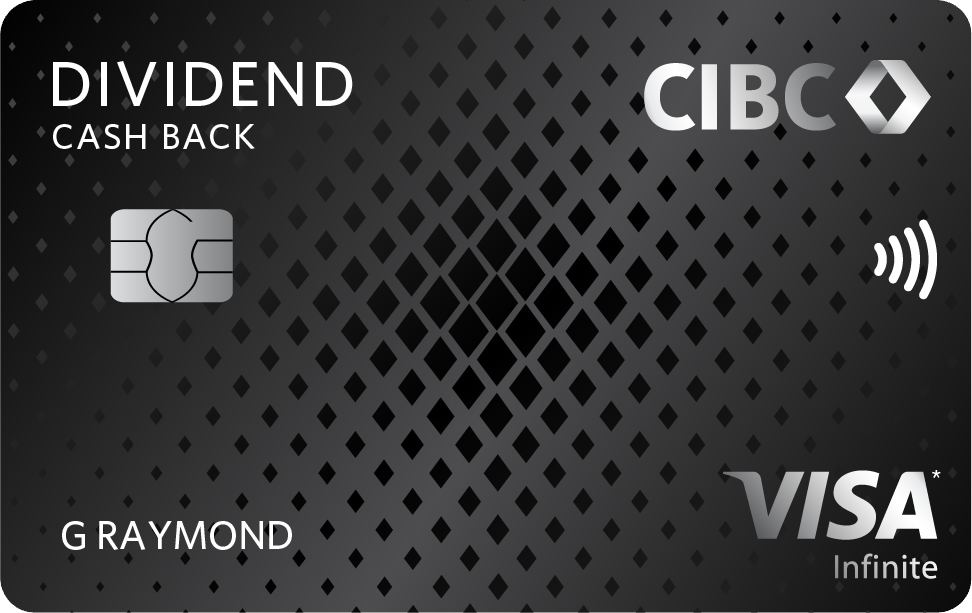
That is the whole lesson in one example. The advertised rate stayed exactly where it was. The amount of spending that earned it dropped by thirty thousand dollars a year. Anyone comparing on the headline saw no change at all.
It is not a trick. The cap was always in the terms. It is just that the cap lives in the part nobody reads and the rate lives in the part everybody does, so the cap is the cheaper thing to move.
Caps Come In More Than One Shape
Some are annual, like a limit on how much category spending earns the boosted rate in a calendar year. Some are per billing period, which is a very different thing: the Amex Cobalt earns five points per dollar on eats and drinks in Canada on the first $2,500 each billing period, and that resets monthly.
A monthly cap is friendlier than an annual one for steady spending and worse for lumpy spending. An annual cap is the reverse. Neither is better in the abstract, and you cannot tell which suits you without knowing your own pattern.
Which is the part most people skip. The right card is downstream of what you actually spend, not of which rate reads highest.
Read The Second Number Every Time
The habit is simple. For any accelerated rate, find the cap, find whether it is annual or per period, and find what the rate drops to afterwards. Three numbers, not one. The credit cards page lists them that way for every category winner in Canada, checked against each issuer.
A rate with no cap stated is a rate with a cap you have not found yet.
The same applies to the things that are not rates. No foreign transaction fee is a real feature and Scotiabank Gold American Express has one. Foreign transaction fees on most other cards are a percentage that never appears in any headline and shows up on every line of a trip.
Why This Is A Portfolio Habit, Not A Card Habit
It generalises. Every product with an attractive number on the front has a second number that decides whether the first one is real. A fund has an MER. A rate has a cap. A yield has a lockup. A revenue line has a customer concentration.
I hold XEQT partly because the 0.20 percent MER is the entire cost, disclosed and knowable in advance, with nothing stacked underneath it. That is the same test applied to a different product.
Read the second number. It is almost always the one that moves.
Card terms change, and every figure here was checked against the issuer at the time of writing. Verify with the issuer before applying for anything. None of this is advice.
Common Questions
What is a spending cap on a credit card?
It is the limit on how much spending earns the advertised accelerated rate. Past the cap, the rate drops to the base rate. Caps can be annual or per billing period, and the two behave very differently.
What changed with the CIBC Dividend card?
CIBC cut the Dividend cap from eighty thousand to fifty thousand in 2025. The advertised rate did not change, so anyone comparing on the headline number saw nothing at all.
Is a monthly cap better than an annual one?
Neither is better in the abstract. A per billing period cap suits steady spending and an annual cap suits lumpy spending. The right one depends on your own pattern rather than on which rate reads highest.
What should I check on any card?
Three numbers rather than one: the accelerated rate, the cap and whether it is annual or per period, and what the rate drops to after it. Then the foreign transaction fee, which never appears in a headline.
Does this apply outside credit cards?
Yes. Every product with an attractive front number has a second number that decides whether the first is real. A fund has an MER, a yield has a lockup, a revenue line has a customer concentration.