Technology
Leonardo da Vinci left behind roughly 7,000 surviving pages of notes. Not a filing system. A pile. Anatomy beside grocery lists, water studies beside a reminder to describe the tongue of a woodpecker. Most of it written backwards, right to left, in mirror script.
The capture was extraordinary. The retrieval was broken. That gap cost the world three hundred years.
His anatomical drawings were not matched for another three centuries. Not because nobody else was capable. Because the work sat in private notebooks, unindexed, scattered between collectors after he died. The insight existed. It simply was not findable.
That is the failure mode of almost every operator I talk to. Nobody is short on ideas. They have a Notion workspace, voice memos, screenshots, two journals and a Slack channel they message themselves in. Capture is solved. Retrieval never happens.

Range only compounds if it is retrievable. Leonardo’s engineering fed his anatomy and his anatomy fed his painting. That crossover happened because all of it was held in one head. Nothing crossed over once the head was gone.
A note you cannot find again is not knowledge. It is storage.
The bottleneck moved
For most of recorded history the expensive part was retrieval. Writing things down was easy. Finding the right page five years later was labour. Indexes were labour. Cross referencing was labour. So people compensated by memorising, and memory caps out fast.
That bottleneck is gone. Search across your own text costs almost nothing now. Point a model at your notes, your call transcripts, your SOPs, your half-finished drafts, and it will surface the connection you forgot you made. Retrieval got solved quietly while everyone argued about which model was best.

Which puts the constraint back exactly where Leonardo had it. Capture.
The model is the cheap part. What you feed it is the asset.
What capture actually means
Capture is not journaling. Journaling is about you. Capture is about the work. Why a listing underperformed in a month it should have been full. The sentence that made a prospect say yes. The exact wording of the objection you have now heard twice this week. The fix for the thing that broke at 11pm and will break again.
Three rules make an archive worth querying.
One, capture in text. A voice memo is storage. A screenshot is storage. If it is not text, no system can search it and neither can you.

Two, one destination. The number of tools does not matter. The number of destinations does. Spread notes across four apps and you own four partial archives, none of them complete enough to be worth asking a question of.
Three, record the context, not the conclusion. Date it, name who was in the room, write what actually happened. You will not remember what you meant by a clever half sentence. You will remember when and who.
The warning in the same story
Leonardo is also the counterexample. The Sforza horse, never cast. The Battle of Anghiari, abandoned. The treatises, unfinished. Endless capture with no ship date is a hobby with excellent handwriting.

The notebook is an input. The only proof it worked is something shipped.
In one translation of the notebooks he writes that iron rusts from disuse and water loses its purity from stagnation. He meant the mind. It applies just as well to the archive. A note nobody ever opens again is rust.
Everyone is going to have the same models. The tools are converging fast and they are converging cheap. What will not converge is five years of your own observations, written down while you were the one in the room.
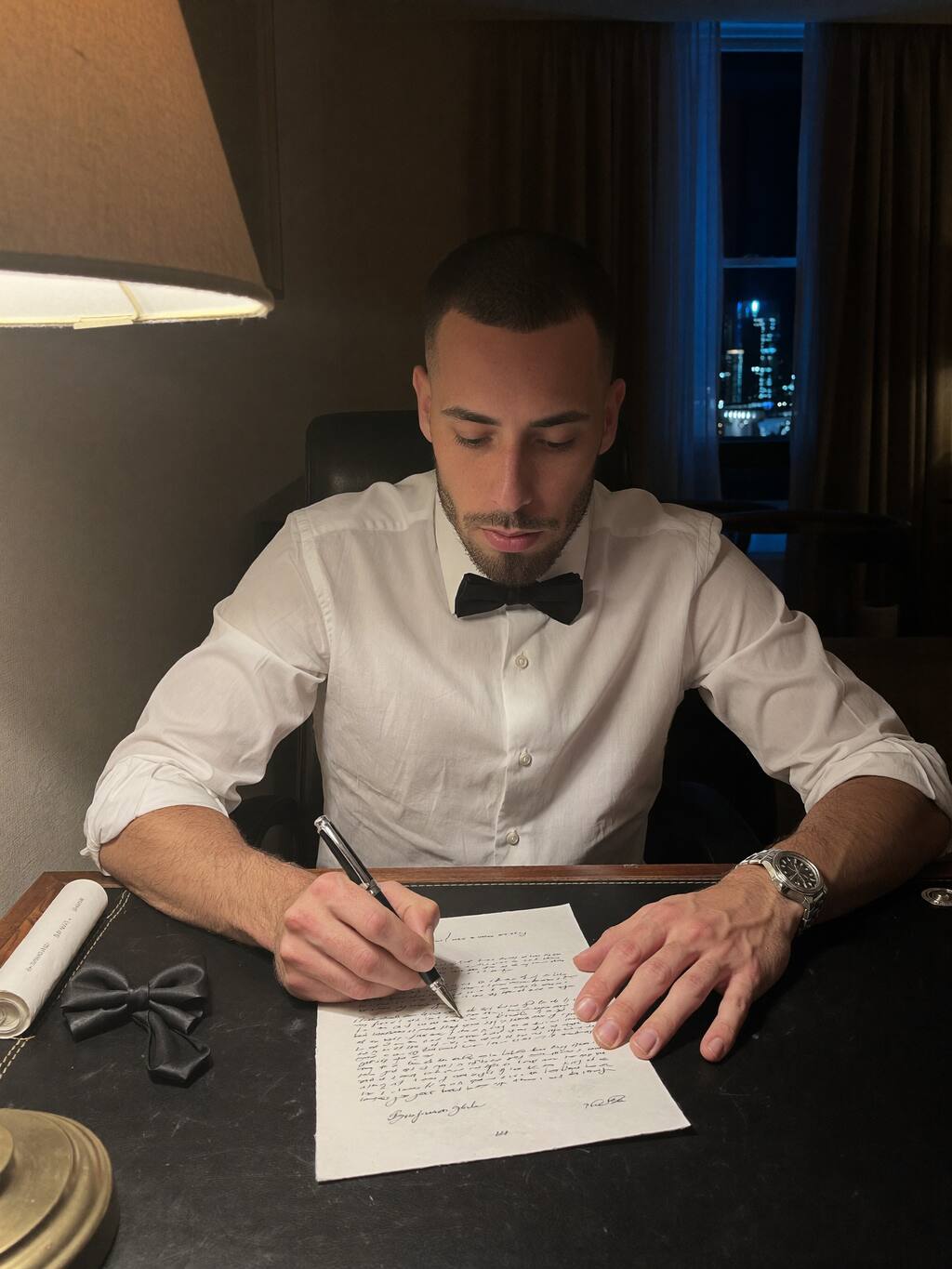
Your notes are the only proprietary data you will ever own. Write them like a machine is going to read them, because it is.