Founder Notes
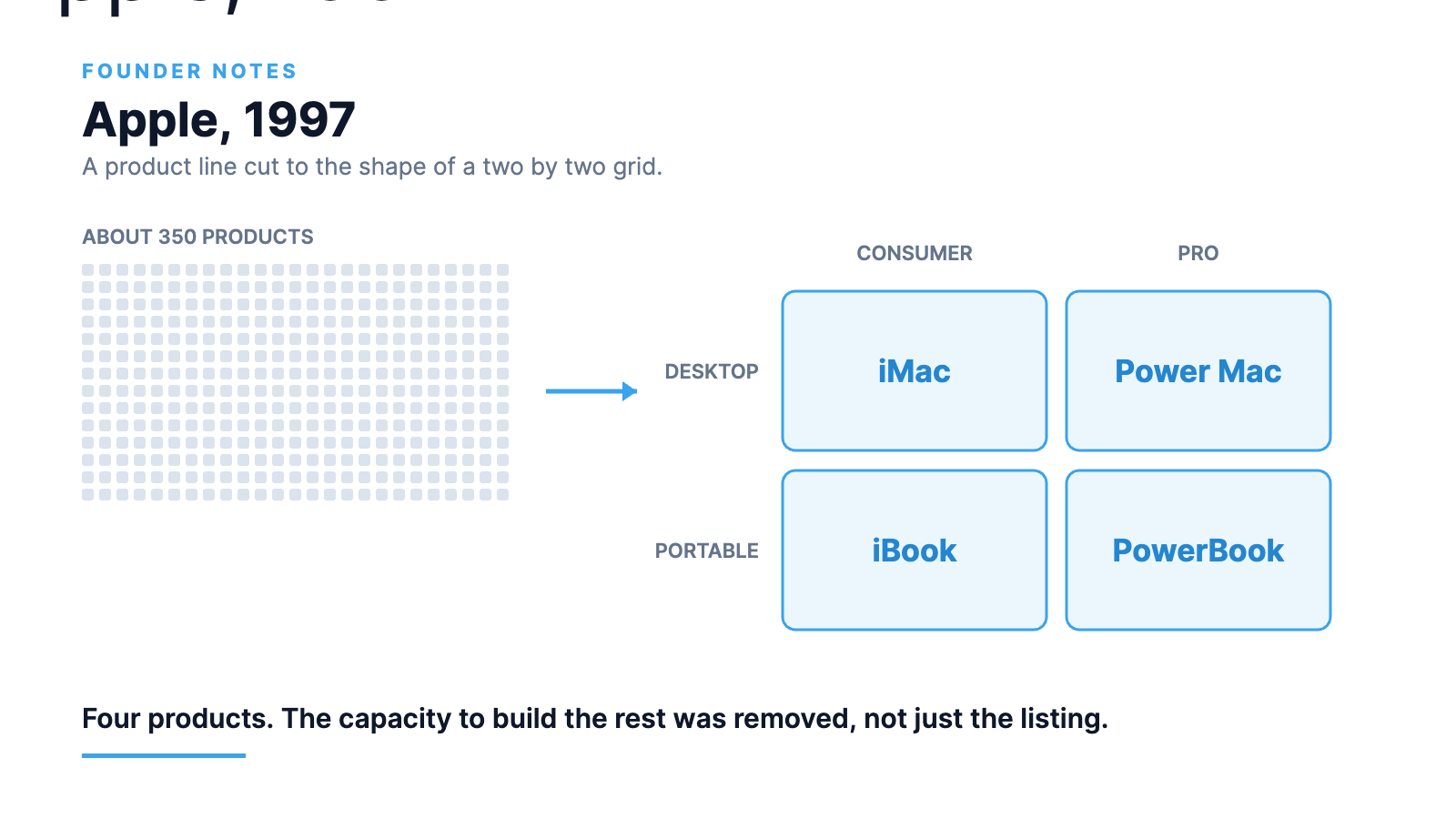
In 1997 Apple was selling something close to 350 products. Steve Jobs came back, drew a two by two grid on a whiteboard, consumer and pro across the top, desktop and portable down the side, and said the company would ship four computers. Four.
Most of what gets written about that meeting treats it as a branding decision. It was not. It was an operations decision that happened to produce a brand. The design reputation Apple carries today is downstream of that grid, not the reason for it.
“Focusing is about saying no.”
He said that at WWDC the same year, and founders have quoted it ever since while doing the opposite.
The menu is a promise
Every line on your service menu is a promise that you are good at that thing. Not willing. Good. The market reads the list that way even when you wrote it as a maybe.
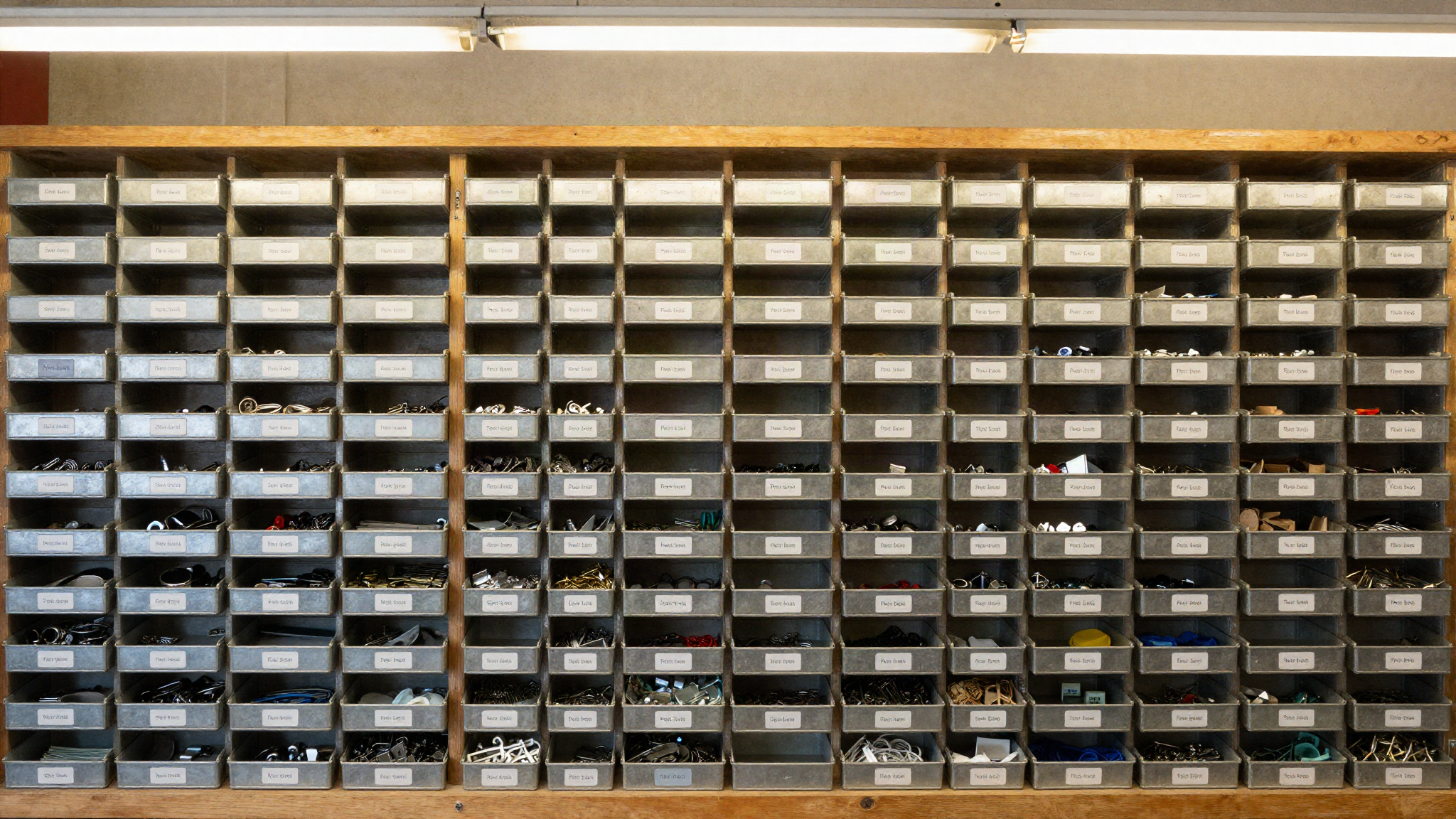
Menus rarely grow on purpose. They grow one client at a time. Someone you already like asks whether you also do the deck, the automation, the ad creative. You say yes, because saying yes is how the relationship stays warm and how the invoice gets bigger. Do that eleven times and you have a studio that offers eleven things and is genuinely excellent at maybe three.
The tell is not revenue. Revenue can look fine for a long stretch while this is happening. The tell is that nothing repeats. It is the same failure as a page that lists everything and sells nothing: a confused buyer does not buy, and a confused operator does not get faster.

What repetition actually buys
I spent two and a half years cutting hair at South Trail Crossing, at the time the largest barbershop in the country, twenty plus barbers and a wall of walk-ins that never really stopped. One product. One thirty minute delivery. You get fast in a way you cannot get fast at eleven things at once. That chair is also where I learned what a ceiling feels like.
Speed is not the only thing you get. You learn exactly what the work costs you, which means you can price it without flinching, and you stop discovering problems at delivery because you have already met all of them.
When I started Wise Media the menu was narrow, mostly because I only knew how to do one thing well. It widened as the client list widened. That is the normal path and it is not a mistake. But at some point the widening stops being growth and starts being drift, and the difference between the two is whether the work repeats.
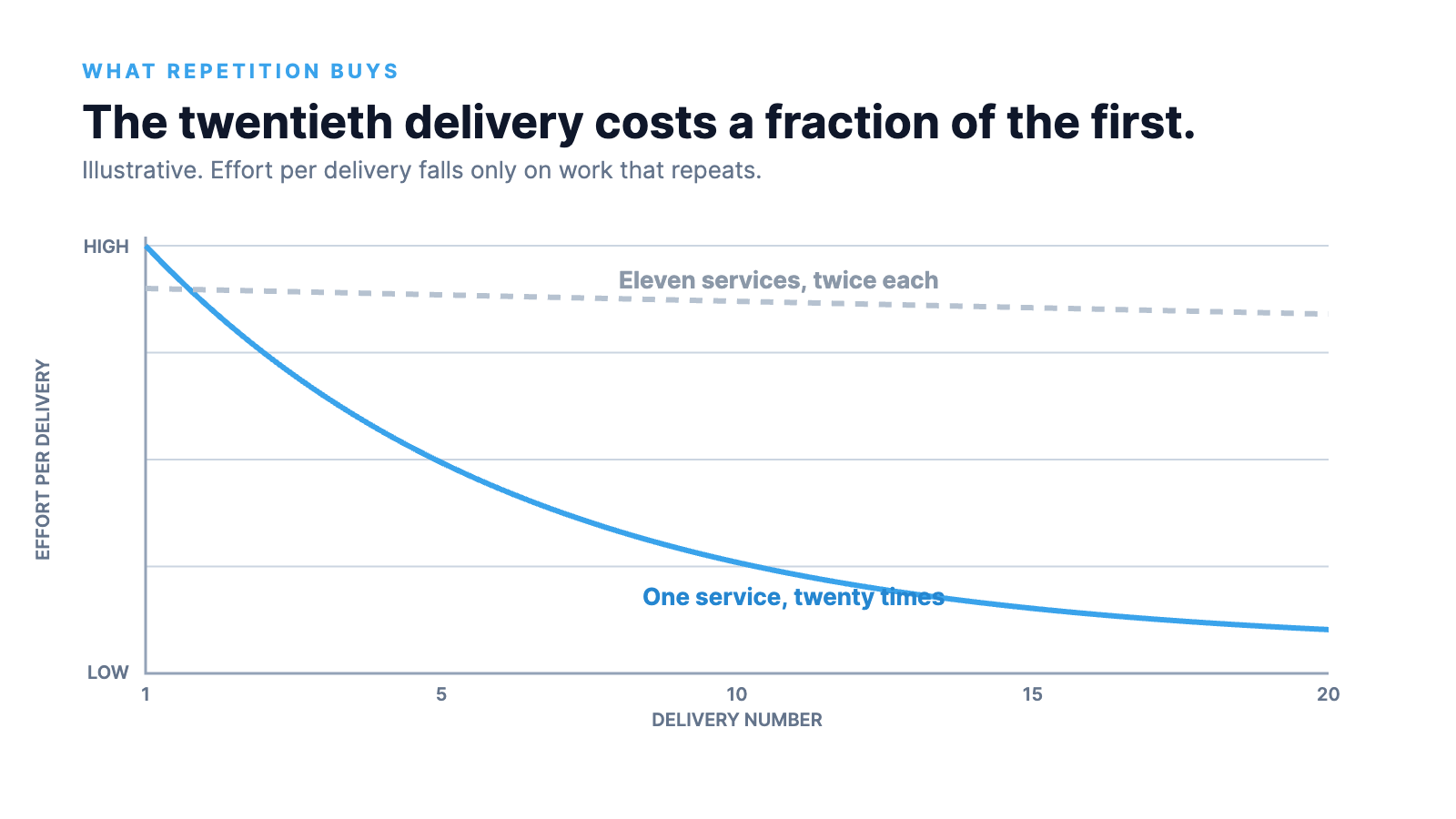
A service you have delivered twice is a favour. A service you have delivered twenty times is a product.
Run the audit this week
Take your own list. Three columns.
First: how many times have you actually delivered this, start to finish, for money. Second: do you have a template, a scope document, and a price you can say out loud without a discovery call. Third: does finishing it produce a case study that makes the next sale easier.
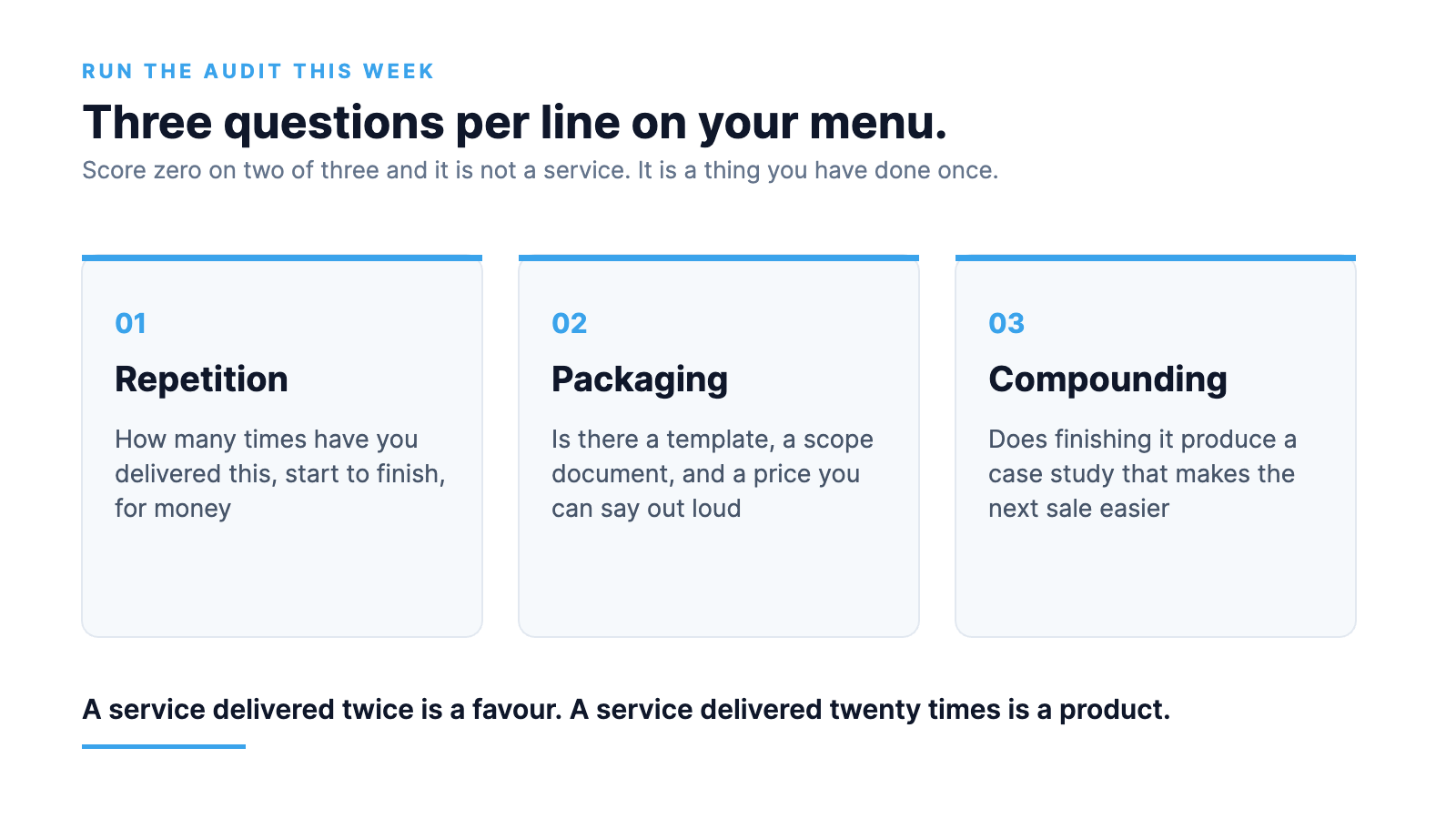
Anything scoring zero on two of three is not a service. It is a thing you have done once. Move it off the menu and into the category of work you will still take when a client you trust asks quietly, at a price that reflects that it is custom every time.
Subtraction has to be structural
The part of the 1997 story that gets skipped is that Jobs did not only shorten the product line. He killed the Newton, exited printers, and ended the clone licensing that was eating the Mac. He removed the company’s ability to say yes to those things at all. If the capacity stays, the yes comes back.
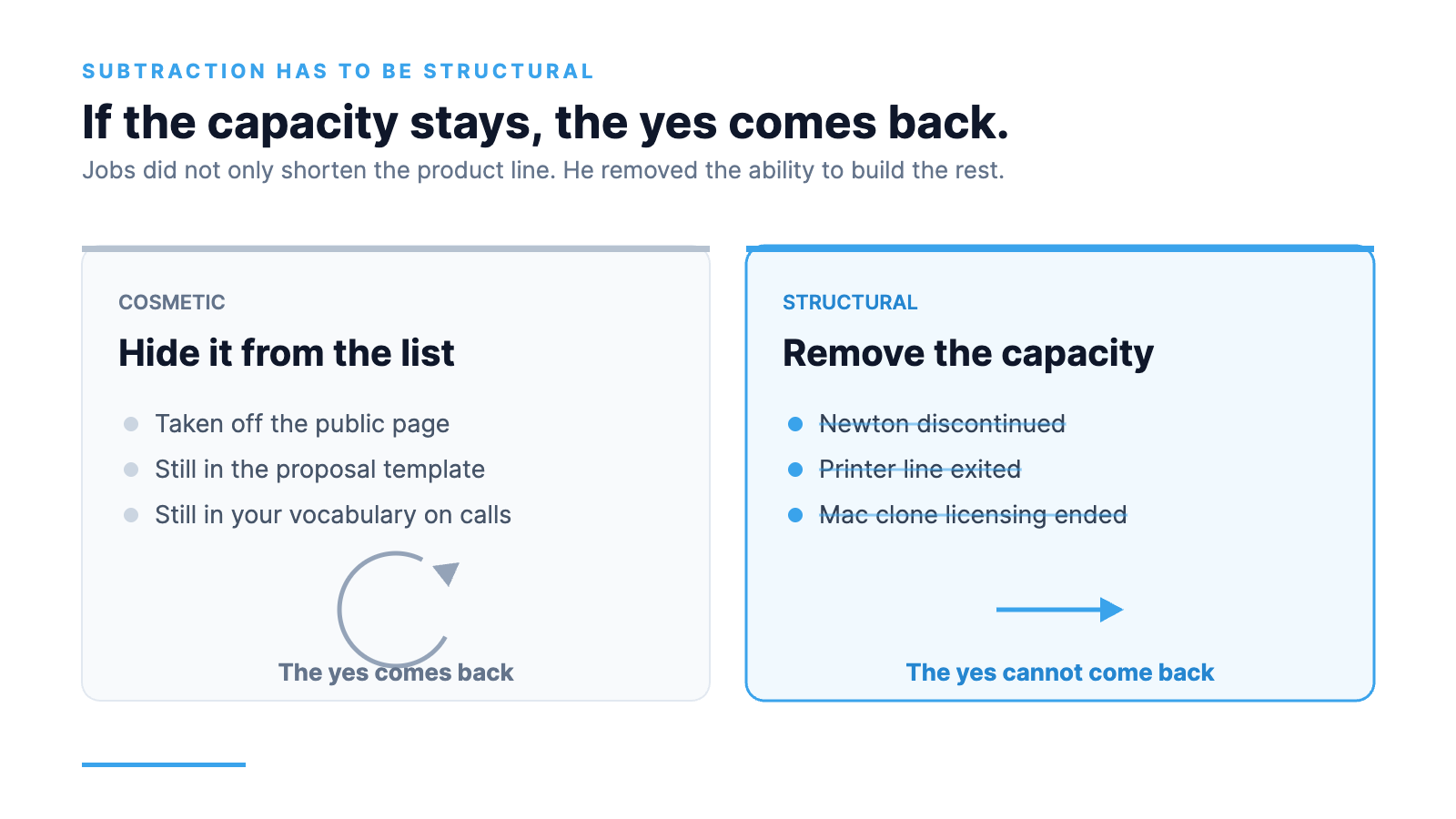
For a service business that means taking it off the website, out of the proposal template, and out of your own vocabulary on calls. A service you have publicly retired is far easier to decline than one that still lives in a dropdown you maintain.
The uncomfortable part is that you will turn down work you could have taken, sometimes from people you like, and no dashboard will ever show you what that decision earned. The return on a good no is invisible by design. It shows up as a team that gets faster instead of busier.
A short menu is not a smaller business. It is a business that knows what it sells.