Technology
In August 1665 the plague reached Cambridge and the university sent everybody home. Isaac Newton went back to his mother’s farm in Lincolnshire and stayed there, on and off, for roughly eighteen months. In that window he worked out the method of fluxions, which the world now calls calculus, ran his first serious experiments on light and colour, and started on the problem that ended as universal gravitation. No lab. No colleagues. No correspondence worth the name. One room, one farm, and nothing on the calendar.
The most productive stretch in the history of science was a building closure.
We tell that story backwards. The plague year gets filed as a miracle of talent, which is convenient, because a miracle is safely unrepeatable. The talent was real and it was not the variable. Newton was already Newton inside Cambridge, surrounded by people who would have interrupted him all day. What changed is that the interruptions were cancelled by force.
Nobody is going to do that for you. No plague is coming for your calendar, no institution is going to shut its doors and send you home with your real problem under your arm. Which means the quiet has to be built on purpose, by the person who benefits from it least in the short run, out of hours that already have claims on them.

This is harder now than it was in 1665, and not because anybody is busier. Newton’s isolation was total in a way ours cannot accidentally be. A letter took days. A question had nowhere to go.
The modern loss is subtler than distraction. It is that nothing stays unanswered long enough to get interesting. A hard question used to sit in your head for a week because there was nowhere to put it. Now it goes into a model and comes back in two seconds, competent, and competent is exactly the quality that stops you thinking.
I use AI across both sides of the business, the agency work and the rental operation, and I would not give it back. It drafts, it reads the contract, it writes the first version of the process document, it runs the schedule. It is the best leverage available right now. It is also the fastest way to never have an original thought again, because it removes the one condition under which original thoughts happen, which is sitting with something you cannot immediately resolve.
The decisions that actually changed how either business works did not arrive on a call and did not arrive in a prompt window. Pricing. What to productize. Which kind of client to stop taking. Those arrive in the third hour of boredom with a single problem, which is a resource nobody sells and every tool quietly spends.

Asked years later how he had found it, Newton gave an answer that reads like a method rather than a boast.
Keeping the subject constantly before me, till the first dawnings open little by little into the full light. Newton, as reported by John Conduitt
Constantly is the operative word. Not a session. Not a sprint week. The same question carried across weeks and re-entered rather than restarted, so the thinking compounds instead of resetting every time you sit down.
Scheduling what Cambridge imposed
First, the block is a standing appointment with a subject, not an empty slot for whatever is loudest that morning. The subject gets written down before the block starts and does not change for the month. One question re-entered thirty times beats thirty questions visited once.
Second, the room has to be unreachable rather than quiet. A notification you successfully ignored still cost you the thought you were halfway through. Phone in another room, inbox closed, and no model open until you have written something of your own first. The order carries the whole thing: your draft first and the tool second, or the tool does your thinking and you file it as collaboration.

Third, protect the walk. Newton’s own account of the apple, told decades later and secondhand by then, puts him sitting in a garden rather than at a desk. Dull physical time with no input is where the work of the block resolves. It belongs on the calendar like a meeting, because anything treated as optional gets eaten first.
What it costs
It costs responsiveness, and that is a real cost rather than a brave sacrifice. Clients notice. Reply times go up. Something small gets dropped. The version where you are reachable all day produces faster answers and worse decisions, and that is the trade most operators are already making without ever pricing it.
It also runs the wrong way if you let it slide, because reachability is a habit on both ends of the line. Train people to reach you in ten minutes and the expectation sets, and the quiet does not come back without a fight.

Newton got eighteen months because a building closed. You get ninety minutes because you defended them.
The plague year was not luck landing on a genius. It was a set of conditions, and conditions can be engineered. Woolsthorpe was not magic. It was a room where nobody could reach him and nothing could answer him faster than he could think.
The Principia did not appear until 1687, two decades after the farm. Those twenty years of grinding were real, and all of it was built on something that only existed because of eighteen unstructured months in the country. The quiet sits upstream of the output, which is exactly why it never looks productive while it is happening.
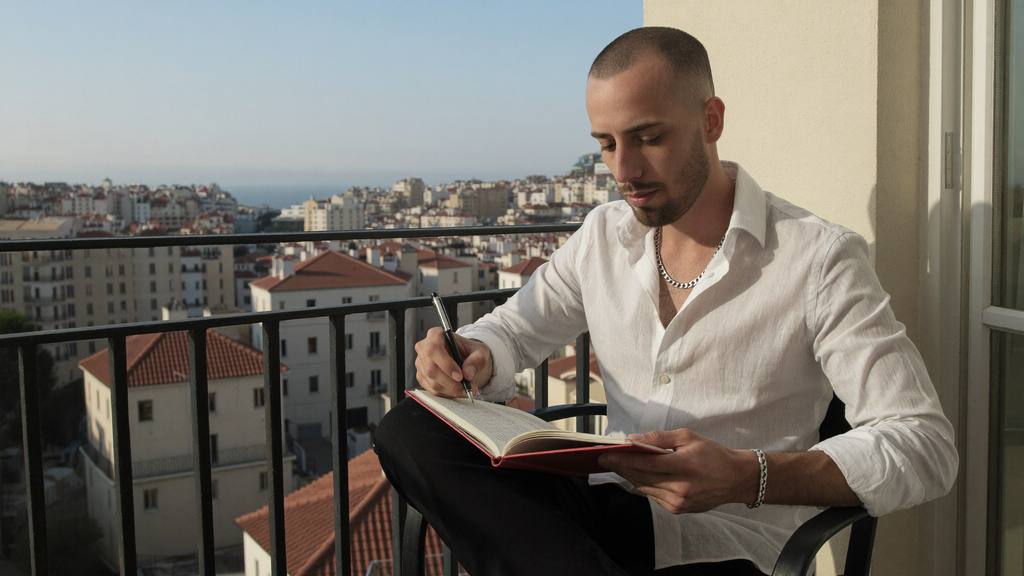
Nobody sends you home any more. If the quiet is going to exist, you are the one who has to close the building.