
Capital · Credit Cards · TD
Forty Nine Dollars
Buys Three Points Of Rate.
TD sells this card two ways. Free at 11.99 percent, or $49 a year at 8.99 percent, on purchases and cash advances alike. It earns nothing, which is the design. I carry this card. Every figure here is off TD, read 6 September 2026.
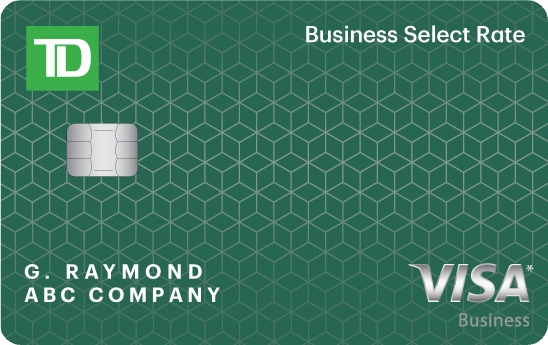
The TD Business Select Rate Visa Card is sold two ways. With no annual fee it charges 11.99 percent on purchases and cash advances. With a $49 annual fee it charges 8.99 percent on both. Additional cards are free on either option and the card earns no rewards. I hold this card. Not advice.
With The $49 Fee
On purchases and cash advances. Same rate for both.
With No Fee
Same structure, three points higher, $0 a year.
Additional Cards
On either option. No per employee fee.
Rewards
TD’s own comparison table lists this card as not applicable.
What The Card Is
Read off TD on 6 September 2026, in their words before mine.
The Cash Advance Rate Equals The Purchase Rate
This is the unusual part. TD charges the same rate on cash advances as on purchases on both pricing options, 8.99 or 11.99. Every other card on this site charges a point or more extra on advances. Interest still runs from the transaction date on an advance, with no grace period.
It Earns Nothing, And TD Says So
TD’s business card comparison table lists rewards for this card as “NA”. There is no points programme, no cash back, no travel currency. The only earn adjacent items TD names are third party merchant offers through Visa SavingsEdge and Starbucks.
The Controls Are The Actual Product
TD’s Card Management Tool moves credit limits between cardholders, sets employee limits “from the dollar amount to the geographic location to the type of transaction”, and turns a card on and off temporarily. On a card with no rewards, this is what the fee is buying.
You Are Personally On The Hook
TD’s agreement states the cardholder, the business borrower and each individual borrower “will be liable jointly and severally (individually and collectively)” for everything owed. Incorporation does not stop that. Read it before you hand out employee cards.
The Arithmetic On The Two Options
This is the only card on the site whose whole decision is one division.
The $49 Pays For Itself At $1,634 Of Carried Balance
The gap is three points of rate, 11.99 against 8.99. Three percent of $1,634 is $49. Carry more than that on average and the fee option is cheaper. Carry less, or nothing, and the free option wins.
The Free Option Is Right If You Pay In Full
A business that clears the statement every month pays no interest at either rate, so the $49 buys nothing. TD gives 21 interest free days on new purchases when the statement balance is paid in full.
A Rewards Card Carrying A Balance Loses To This
A business rewards card at 19.99 or 21.99 percent earning one percent is losing nine to eleven points a year on whatever it carries. Against 8.99 percent earning nothing, this card wins on any balance that actually sits.
Cash Advances Cost The Same As Purchases Here
At 8.99 percent an advance costs the same rate as a purchase, which is unusual enough to be worth stating twice. Interest still runs from day one on an advance, so the rate is equal and the grace period is not.
The Case Against Carrying It
Same standard as every other page here.
It Earns Nothing, Which Costs You On Spend You Clear
Every dollar of business spend put here rather than on a rewards card you pay off in full is a dollar earning zero. This is a balance card. Using it as a spending card is the mistake.
There Is No Travel Insurance Included
TD sells travel medical and trip cancellation as separately purchased options on this card, not as benefits. No common carrier accident, flight delay or baggage cover is named for it.
TD Does Not Publish The Foreign Currency Fee
The agreement gives the conversion mechanism and defers the percentage to a disclosure statement TD does not publish. See below.
No Named Accounting Integration
TD names custom reports and spending organised by cardholder or supplier category. No third party accounting integration and no export format is named on td.com for this card. If your bookkeeping depends on a direct feed, confirm it before you apply.
How It Sits In A Stack
Not advice. How this card reads next to the others published here.
It Is The Business Version Of The True Line
Same idea as the MBNA True Line published here: no rewards, low rate, the card a balance sits on. The difference is the employee controls and the joint and several liability, both of which only matter on a business card.
The Two Options Make It Two Different Cards
$0 at 11.99 and $49 at 8.99 are not tiers of one product, they are a bet on whether you carry. Getting that bet wrong costs at most $49 a year, which is the cheapest wrong decision on this site.
It Is In My Wallet
One of the nine on the stack page, and one of two business cards there. It earns nothing on purpose, and it is the only card here whose entire value is the number.
What Could Not Be Confirmed
In circulation, and not on the issuer page. Printed rather than dropped.
The Foreign Currency Conversion Fee
TD’s cardholder agreement states currency is converted “by applying a rate established by VISA plus a fixed percentage as shown in the Disclosure Statement”. That statement is issued per account and is not published on td.com. The 2.5 percent in wide circulation could not be confirmed for this card on 6 September 2026.
The Penalty Interest Rate
TD states that if a minimum payment is not received within 30 days the rate “will go up to the rates shown in the Disclosure Statement”, and that regular rates resume after two consecutive on time minimum payments. The penalty rate itself is not published. On a card sold entirely on its rate, that is the missing number that matters most.
Whether The $49 Is Per Card Or Per Account
TD lists additional cards at $0 and describes the $49 as an option to lower your interest rate, without saying whether it is charged once per account or once per card. It reads as account level. TD does not say so.
Every Other Fee On The Card
Cash advance fee, over limit fee, dishonoured payment fee and statement copy fee are all referred by the agreement to the unpublished disclosure statement. No dollar figure for any of them appears on td.com.
All figures read off TD’s own Canadian small business pages and linked PDFs for the TD Business Select Rate Visa Card on 6 September 2026: two pricing options being $0 annual fee at annual interest rates of 11.99% on purchases and 11.99% on cash advances, or a $49 annual fee at 8.99% on purchases and 8.99% on cash advances, additional cards at $0, no rewards programme with TD’s own business card comparison table listing rewards as not applicable, a 21 day interest free grace period on new purchases when the statement balance is paid in full by the due date and no grace period on cash advances which accrue interest from the transaction date, a penalty rate applying if a minimum payment is not received within 30 days with regular rates resuming after two consecutive on time minimum payments, auto rental collision and loss damage insurance for up to 48 consecutive days on vehicles with a manufacturer’s suggested retail price up to $65,000, purchase security covering theft or damage within 90 days of purchase, extended warranty protection doubling the manufacturer’s warranty by up to one additional year on warranties of five years or less, a $60,000 aggregate lifetime maximum across all TD credit cards shared by purchase security and extended warranty, an emergency cash advance of up to $5,000 subject to available credit, travel medical and trip cancellation offered only as separately purchased optional coverages rather than card benefits, a TD Card Management Tool that moves credit limits between cardholders and sets employee restrictions on spend type, geography and thresholds and turns a card on and off, custom reporting by cardholder or supplier category, a $250 contactless point of sale limit, eligibility stated as Canadian residency and the age of majority, and an agreement making the cardholder, the business borrower and each individual borrower jointly and severally liable for all amounts owed. The foreign currency conversion fee, the penalty interest rate, whether the $49 is charged per card or per account, and every other fee amount could not be confirmed on td.com and are published above as unconfirmed. TD states no welcome offer and no first year fee rebate for this card. No figure on this page comes from a comparison site. Cody Wise holds this card.
The Rest Of The Card Pages
What is actually in the wallet, and the one that is not.
The Whole Card Stack
Nine cards across six issuers, what each one costs and what it is actually for.
The Amex Platinum
The premium card in the wallet, with the $799 fee broken down against its credits.
The Centurion
The card with no application form, and what American Express actually publishes about it.
Common Questions
Two options. No annual fee at 11.99 percent, or $49 a year at 8.99 percent. Additional cards are free on either option. Read off TD on 6 September 2026.
11.99 percent on purchases and cash advances with no annual fee, or 8.99 percent on purchases and cash advances with the $49 annual fee. The cash advance rate matches the purchase rate on both options.
No. TD’s own business card comparison table lists rewards on this card as not applicable. There is no points programme and no cash back.
The gap is three points of rate, so the $49 is covered at about $1,634 of average carried balance. Above that the fee option is cheaper. If the statement is paid in full every month, neither rate applies and the free option is right.
TD does not use that phrase, but the cardholder agreement makes the cardholder, the business borrower and each individual borrower jointly and severally liable for all amounts owed on the account.
A Rate Is Not A Return
Until You Spend There.
Every accelerated rate in Canada is a rate on one category. The only question that matters is whether that category is where your money actually goes.
Not financial advice.