Technology
Everyone in your market is running the same model you are. Same weights, same subscription, same price. Whatever edge you thought you bought the day you signed up, your competitor bought that morning for the same money.
A tool anyone can rent is not an advantage. It is the new floor.
The model shows up knowing everything general and nothing specific. It has read more than you ever will. It has not read your pricing logic, your client’s voice, the vendor who went quiet in March, or the reason you stopped taking a certain kind of project three years ago. That knowledge already exists inside your business. It is scattered across four inboxes, two notebooks and your own head, which means the model cannot reach it and neither can anybody you hire.
Context engineering is the unglamorous work of collecting that material into a form a machine can load. It is not prompting. Prompting is what you do in the last ten seconds. Context is what you spent two years assembling before you opened the window.
There is a good precedent for this, and it is older than the internet.
The invention factory
In 1876 Edison moved his operation to Menlo Park, New Jersey, and built what he called an invention factory. Most of the story people repeat is about output: the phonograph in 1877, the practical incandescent lamp in 1879, over a thousand patents across a career. The output is not the interesting part. The infrastructure is.

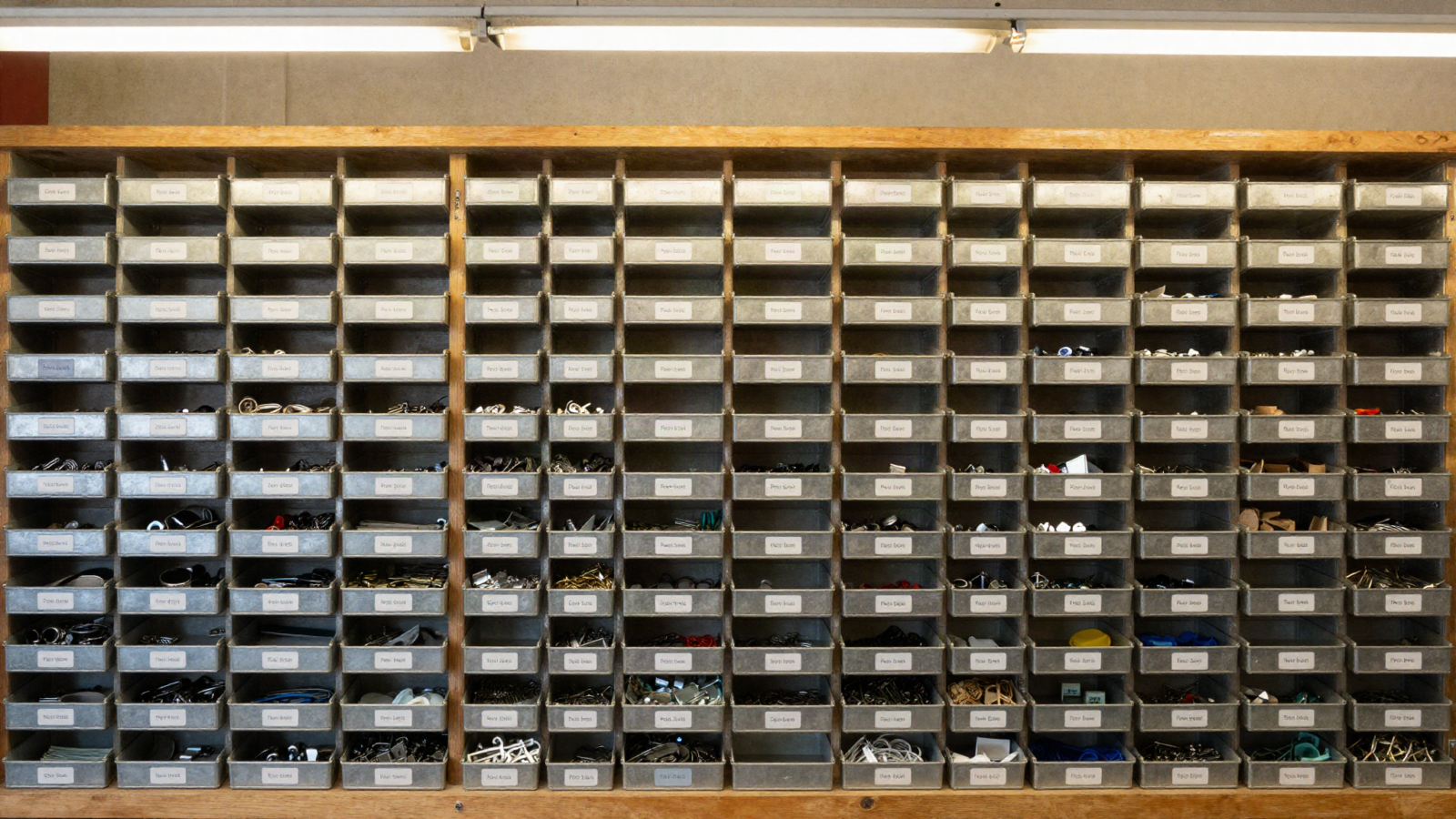
Two pieces of it are worth copying. The first was the stockroom, kept stocked with essentially every material an experimenter might reach for, so no test ever stalled waiting on a supplier. The second was the notebooks. Every man on the bench wrote down what he tried, what happened, and the date. The archive that habit produced, now held at the Edison National Historical Park, runs to roughly five million pages.
So when the lamp came down to finding a filament that would not burn out, the team was not starting from zero. They were starting from years of catalogued attempts, in a building where the material was already on the shelf. The genius story is the better story. The stockroom is the better lesson. It is the same mechanism behind da Vinci’s notebooks, one man running a search engine on paper, except Edison ran it at the scale of a payroll.
The lab was not fast because the men were brilliant. It was fast because nothing ever had to be looked up twice.
What goes on the shelf
Your model is the bench. It is rented, it is identical to everyone else’s, and it improves every year without you lifting a finger. Your stockroom is the part you own, and nobody is going to stock it for you.

Four things belong in there. Your finished work, the good version, meaning the thing that shipped and performed rather than the brief or the draft. Your decisions with the reason attached, because a decision without its reason is trivia. Your corrections, since every time you rewrite a model’s output by hand that rewrite is the most valuable signal in the building, and almost everyone deletes it. And your constraints: what you never do, what you always charge, who you turn down.
None of that is a prompting skill. Prompting you can learn in a week from people giving it away free. Capture is a habit, and a habit is the only kind of advantage that gets harder to copy the longer you have had it. It is also what makes automation safe: you automate the process, not the judgment, and the judgment is exactly what lives in the stockroom.
Why almost nobody builds it
Because it pays nothing on the day you do it. The first six months of writing down why you made a decision feels like admin, and admin is the first thing a busy operator cuts. Edison ran that stockroom for three years before the lamp made the building famous.

That delay is the moat. If the work paid immediately, everybody would do it and it would be worth nothing. It holds precisely because it is slow and boring, and the competitor with the identical subscription would rather spend the afternoon testing a new tool. The pattern repeats everywhere in technology: CUDA looked wrong for ten years before it looked inevitable.
Models get cheaper every year. Context gets more expensive to replicate every year. You are only on the right side of both curves if you are writing it down.
Solomon set the sequence out in one line about three thousand years before anyone rented a GPU: “Prepare thy work without, and make it fit for thyself in the field; and afterwards build thine house.” Stock the yard first. The house goes up fast when the material is already there.

The practical version is smaller than it sounds. One file per project, updated the day the project closes. One running decision log. Keep the version you rewrote by hand next to the version the model handed you. Do that for a year and you can give a machine something no competitor is able to download.

The tool is rented. The context is owned. Build the part that keeps its value when the subscription lapses.