Crypto
Crypto’s most successful product is denominated in the currency crypto was built to replace. Roughly 99.7 percent of stablecoin supply is pegged to the US dollar. Seventeen years of argument about sound money, and the thing people actually use on a Tuesday is a digital claim on the exact fiat everyone in the room said was finished.
The winning product was never the argument. It was the dollar, moved faster.
I do not write that to score a point on the maximalists. I write it because it is the cleanest lesson in product-market fit available to any founder right now, in any industry, and it has been sitting in plain sight for years while the industry looked past it.
Every other crypto category had to manufacture its demand. NFTs needed a story. DeFi needed a yield. New chains needed a thesis and a conference. Stablecoins needed none of that, because the want was already there. People wanted to move dollars, and the existing rails were slow, expensive, and closed on weekends. The product did not invent a new desire. It took friction out of an old one.

Watch the volume instead of the noise. Adjusted stablecoin settlement volume ran near $10.9 trillion in 2025 by measures that strip out bot trades and exchange-internal transfers, against roughly $14.2 trillion of Visa payments volume in the same window. Methodologies disagree and the estimates spread widely depending on what counts as organic. The order of magnitude is the point: a category most people still describe as speculative is settling in the same weight class as the largest card network on earth.
Nobody tweeted that into existence.
The coin that weighed what it said
England had a currency problem in 1696 that was not remotely theoretical. Silver coins were hammered rather than milled, with soft irregular edges. So people clipped them. Shaved the rims, kept the silver, spent the coin at face value. Over decades the circulating coinage was worth visibly less as metal than as a number, and everybody knew it. Merchants stopped accepting coins by count and started weighing them. Commerce slowed to the speed of a scale.
The fix was not a new theory of money. It was the Great Recoinage, and the man who ran it was Isaac Newton, appointed Warden of the Mint that year and Master three years later. He did not publish a treatise on monetary philosophy. He restruck the coinage with milled edges so that clipping became visible at a glance, then went out and hunted counterfeiters through London taverns and built the cases himself. The most notorious of them, William Chaloner, was prosecuted and hanged in 1699.
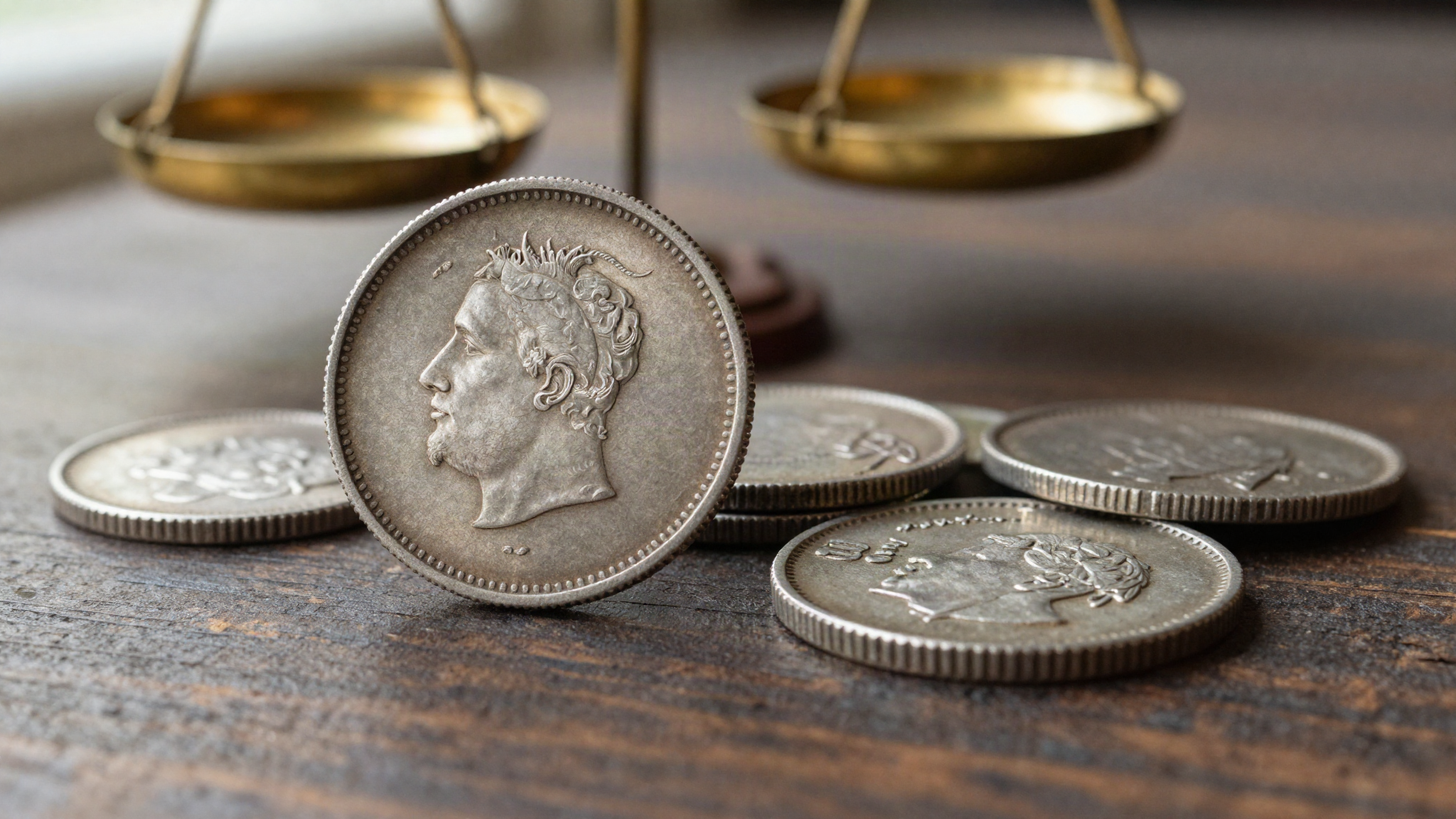
Newton spent the back half of his life making a unit of account boring enough to trust. History remembers him for the Principia. The Mint is the footnote. But the milled edge on the coin in your pocket right now is that footnote, still running, three centuries later.
Trust is not a feature you bolt onto the product. It is the product.
What this means if you are building
The lesson generalizes well past crypto, which is why I keep returning to it.
Founders fall in love with the part of the product that is new. The market buys the part that is familiar. Stablecoins won because they asked the user to change exactly one thing, the rail, and held everything else constant: the unit, the mental model, the price on the sticker, the word dollar. Every additional thing you ask somebody to relearn takes a bite out of your adoption curve, and the bites are not small.
I have watched the same pattern run in short-term rentals and in agency work. The features a client gets excited about during a pitch are almost never the features they end up using. What they use is the thing that quietly removed a step they were already doing badly.

For real world asset tokenization, which is where most of my Web3 attention goes, this is the entire roadmap. RWA does not have to convince anyone that a building is valuable. The rent exists. The title exists. Demand arrives pre-attached. The only live question is whether settlement is cheaper and faster on the new rail than the old one. If it is, adoption is arithmetic. If it is not, no whitepaper closes the gap.
Boring is the moat
Here is the uncomfortable part. The winning product in your category is probably the least interesting version of it. Stablecoins are the least ideologically pure thing crypto has ever built. They are also the only thing it has built that somebody in Lagos or Buenos Aires uses without thinking about it, on an ordinary afternoon, for an ordinary reason.

Novelty gets you a demo. Familiarity gets you a habit.
Solomon wrote that the thing that has been is the thing that shall be. Money has always been a trust technology wearing whatever material was convenient at the time: silver, paper, a database entry, a token on a ledger. The material keeps changing. The requirement never has.
Build the thing people already want, on rails that cost less than the rails they are using. Then get out of its way.

The market does not reward the most original idea. It rewards the shortest distance between a want and a settlement.