
Legacy & Lineage
I come from two sides that never should have met. A Chilean side out of Concón on the Pacific coast, and a Métis-Scottish side out of the Hudson’s Bay Company fur trade and the Cariboo. One side had been in this country so long it was still being drawn. The other arrived as refugees.
They met in Calgary. I’m what happened.
For a long time I held these as two unrelated stories that happened to end in the same person. What corrected me was noticing that both sides did the same work, and both sides lost it and had to build again.

The Cariboo side
My father’s line runs back through the fur trade. Peter Skene Ogden, a Chief Factor of the Hudson’s Bay Company, married a Cree woman. Her name was never written down. That absence isn’t something I can fix by guessing — it’s the record doing exactly what it was built to do, and naming the silence is more honest than filling it.
From there the line runs through another Ogden, a Chief Trader, then to Margaret Julia Ogden, who married Gavin Hamilton Sr., also a Chief Factor. Then John Rae Hamilton, who married Elisabeth Manson. Then Adelaide Hamilton, born 1888 — I can find her at thirteen in the 1901 census for the Yale-Cariboo district, listed with her brother John and her sisters Elizabeth and Sarah. Adelaide married Raymond Gaynor Wise. Their son was my great-grandfather.
That is the Métis line. Fur traders and their Indigenous wives, generation after generation, building a country nobody was writing down properly.
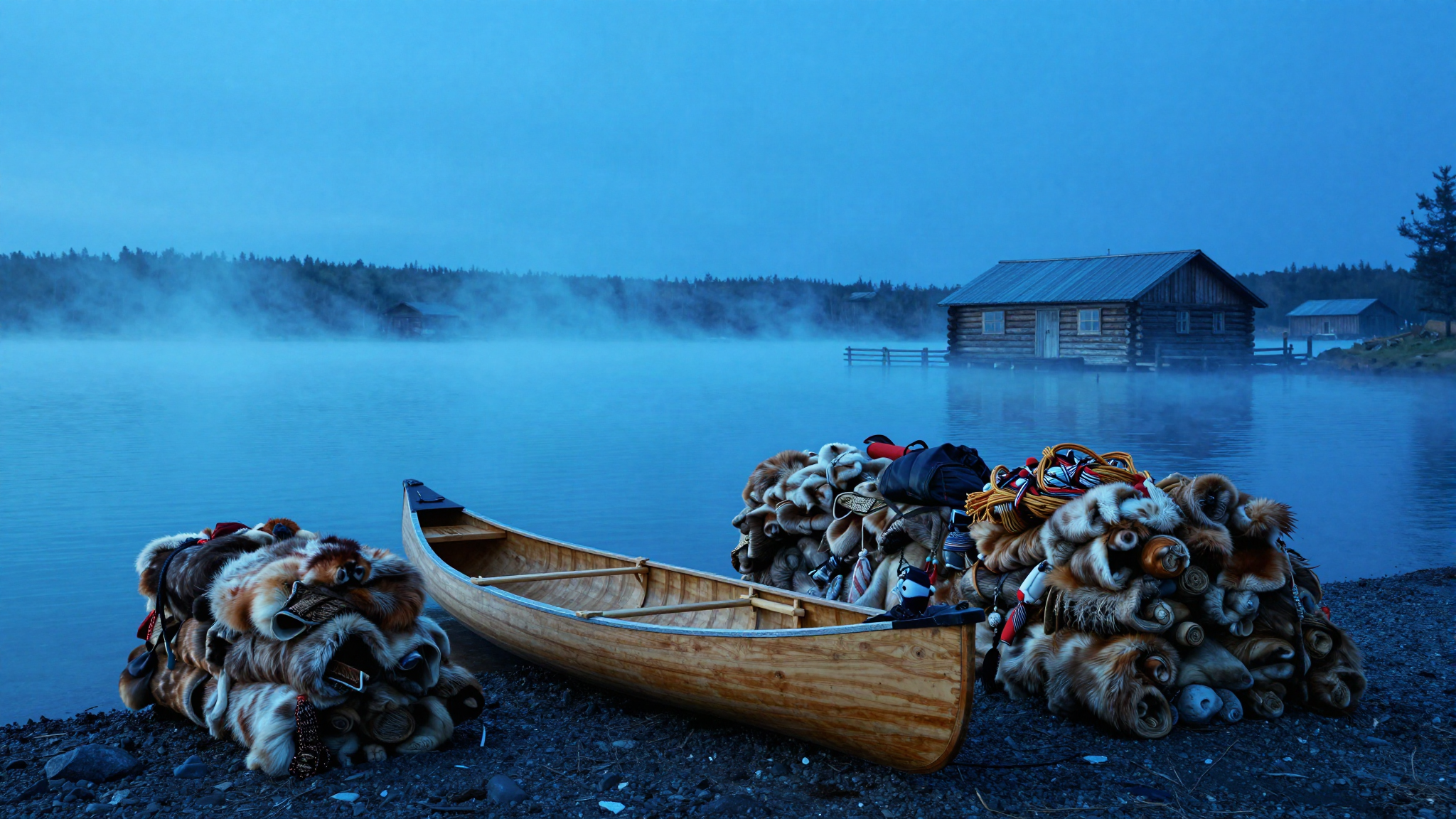
Then the industry died. The Cariboo Gold Rush ended the fur trade in 1858, and the work that had supported four generations simply stopped existing.
They didn’t leave. They changed businesses without changing skills. My great-grandfathers ran stagecoach and freight wagon road houses along the Cariboo Trail — feeding and bedding the same kind of traveller, on the same hard routes, for a different reason. One of those was the 149 Mile House. It got passed down to Adelaide.

The Chilean side
My mother’s line is Machuca, out of Concón. My great-grandfather Ismail built four businesses over his working life. A barbershop. A colectivo — the shared-route taxi that moves working people around a Chilean city. A ropa americana operation, used American clothing sold out of the back of his van. And a restaurant, Don Pimpo, empanadas and seafood on the coast.
Not all at once. One after another. Four separate times he decided to build something with no cushion under him.
The barbershop is the one that stops me. He didn’t open it because barbering was lucrative. He opened it so his son — my grandfather Ruben — would have a trade and a place to work. A business built as an inheritance, handed over while he was alive to teach it.
Ruben became a volunteer firefighter at eighteen. In Chile the fire service is entirely volunteer — nobody is paid. He was also a miner. And he, his father, and his uncle were all among the founders of the Concón fire station: three generations of one family on the founding roster of an institution designed to pay them nothing.
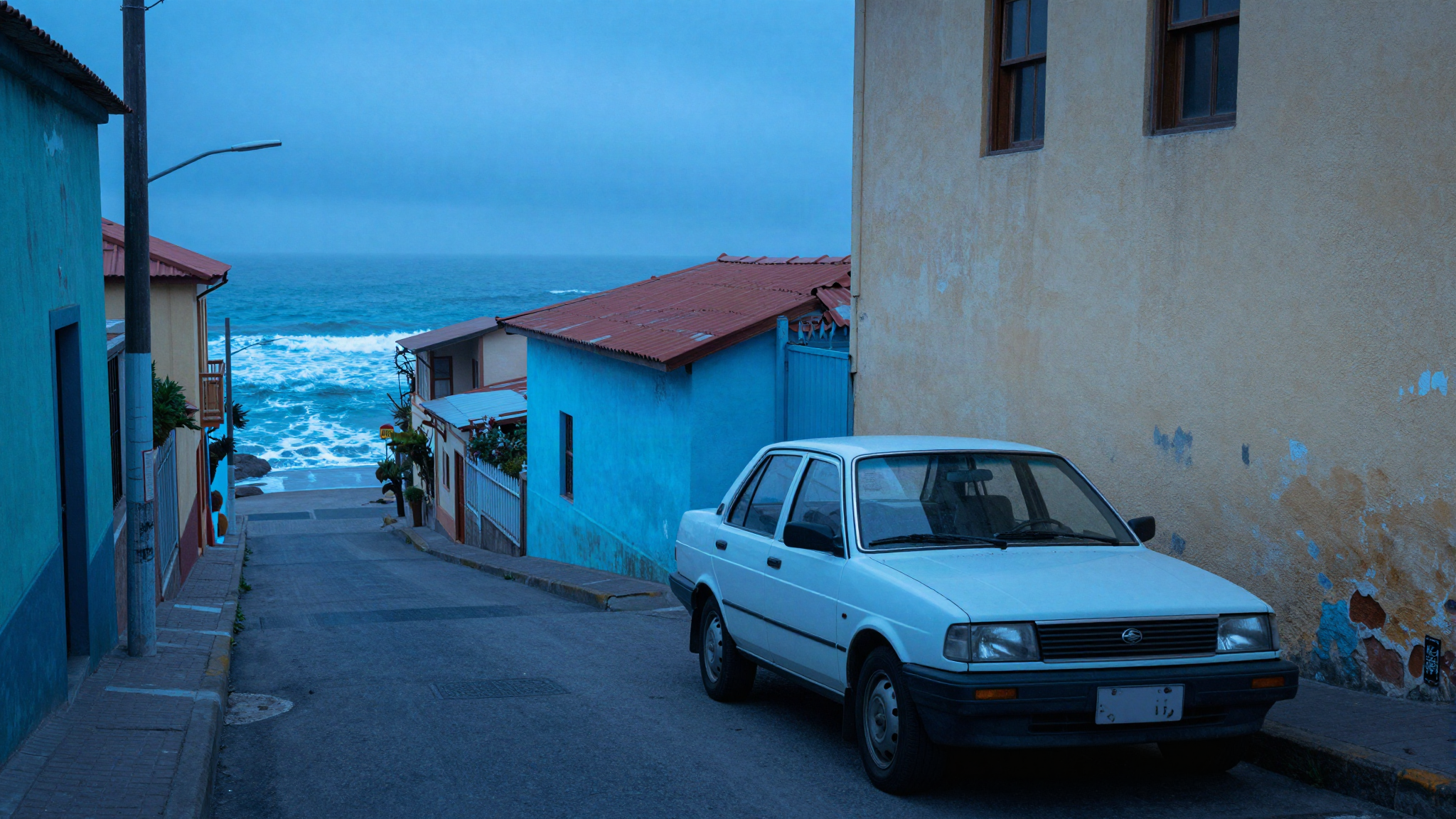
Then the coup came, and they fled. Chile first, then Argentina, then Canada.
You do not help found a fire station in a town and then leave that town by choice.
Everything Ismail built stayed behind. In Canada, Ruben went into the trades and became a unionized boilermaker and welder — Winnipeg first, then a transfer to a Calgary plant, then shift work on shutdowns in Fort McMurray and Grande Prairie. Brutal, unromantic work. Long rotations, cold, other people’s schedules, in a language he was still learning, having already lost one.
That’s why I’m in Calgary. The whole reason.
What both sides were actually selling
Here’s what took me too long to see.
The 149 Mile House sold a bed and a meal to people travelling a hard road. The colectivo sold passage to people who needed to get somewhere. Don Pimpo fed them when they arrived. Separated by a hemisphere and most of a century — and they are the same business.
Both sides of my family sold shelter and passage to people in transit.
I run short-term rentals. I put travellers in beds in a mountain town and make sure the place is clean, warm and ready when they arrive after a long drive. I didn’t know any of this when I started. I picked that business because the numbers worked.

I’m not going to claim destiny. Plenty of families have roadhouse keepers in them and nobody in the next four generations goes near hospitality.
But look at what actually repeats. The fur trade ended in 1858 and they built roadhouses. The coup came and they rebuilt from nothing in a country that didn’t speak their language. Ismail built one business, then another, then another. Not one of these people got to keep what they built.
Neither side inherited a business. Both sides inherited the willingness to start the next one.
That’s the part that transmits, and nobody sat me down and taught it. It’s narrower than fate and more useful: you serve people who are moving through, you keep the place ready before anyone arrives, and when the thing you built is gone, you build the next one.
The Chilean side and the Métis-Scottish side had no language in common, no shared religion, no overlapping century. What they shared was a trade, a road, people who needed something when they got there — and the experience of losing all of it and starting again.
I know exactly who I come from. Both sides were in the same business the whole time, and both sides had to begin twice.