
Every brand needs an origin story. Most people invent one. Mine is documented — in Hudson’s Bay Company ledgers, Royal Geographical Society citations, and a Freemason’s lodge book in Orkney, Scotland.
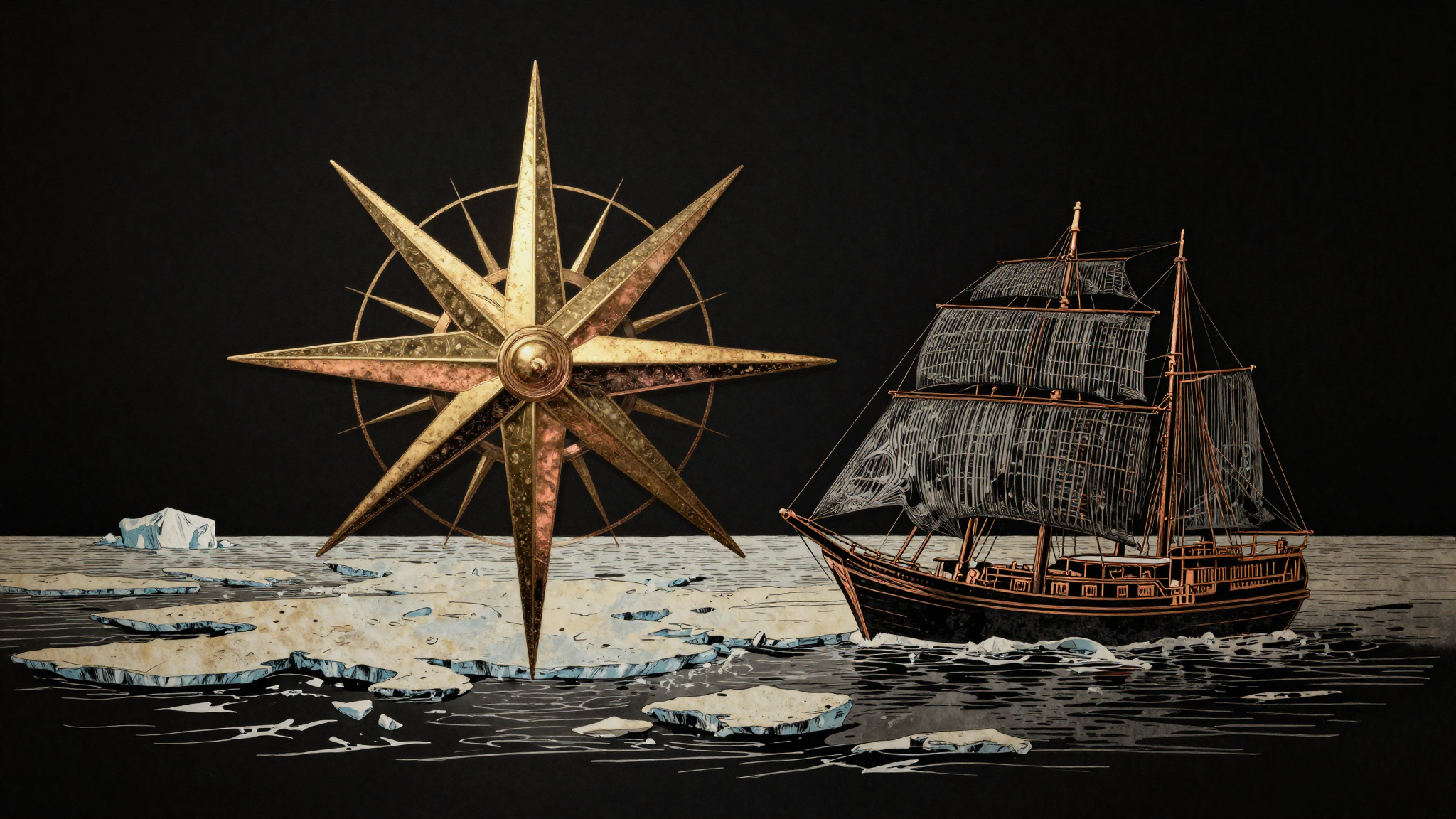
In 1854, a Scottish surgeon named Dr. John Rae did something the entire British Naval establishment couldn’t: he found out what really happened to the Franklin Expedition — the most famous lost cause in Arctic history. Two ships, 129 men, gone since 1845. Rae found the answer not by outspending the Royal Navy, but by out-thinking it. He traveled light, learned from the Inuit, snowshoed 50 miles a day, built his own shelter, hunted his own food, and mapped over 1,800 miles of uncharted coastline across four expeditions — while the Navy’s massive, over-provisioned ships kept failing in the same ice he crossed on foot.
When he came home with the truth — including evidence that the missing men had resorted to cannibalism to survive — Victorian England didn’t want to hear it. Lady Franklin and Charles Dickens ran a public campaign to discredit him, dismissing Inuit testimony as “the vague babble of savages.” Rae was never knighted. He was quietly written out of the story he’d solved.
He was right about all of it. Modern forensics confirmed the cannibalism. The wrecks of HMS Erebus and HMS Terror were found in 2014 and 2016 — exactly where Inuit oral history said they’d be. Rae Strait, the final navigable link in the Northwest Passage, still carries his name on every map of the Canadian Arctic.
John Rae has no descendants — he and his wife lost every pregnancy. But his sister, Marion Sibbald Rae, did. She married into the Hamilton family, and her son, Gavin Hamilton Sr., became a Chief Factor of the Hudson’s Bay Company in his own right — one link in a fur-trade dynasty of explorers and officers stretched across Rupert’s Land.
Three generations later, a descendant was named John Rae Hamilton, after his great-uncle the explorer. That’s not an accident. Families don’t name children after relatives by chance — they do it to keep something alive. That name, and the values behind it, carried forward through Adelaide Margaret Hamilton, to Raymond Thomas Wise, to Donald William Wise, and eventually to me.
There’s a thread running underneath all of it: the Lodge of Stromness, Orkney’s oldest Masonic lodge, sitting at the exact harbour where HBC ships loaded crew and provisions before crossing the Atlantic. Rae was initiated there, alongside much of the Orcadian officer class that ran the Company’s inland operations. The HBC and the Craft ran on the same logic — hierarchy, loyalty, and a portable network of trusted men who could show up in a foreign port and be recognized. Rae used that network to reach the Royal Society and the scientific establishment once his Arctic career ended. It wasn’t luck. It was infrastructure, built a generation before he needed it.
I didn’t inherit a fortune from any of this. I inherited a pattern.
Move fast and light while the competition drags a fully provisioned ship through ice it doesn’t understand. Learn from the people who actually know the terrain instead of assuming your institution’s way is the only way. Tell the truth even when the establishment — the Lady Franklins and Charles Dickenses of any era — would rather you didn’t. Build the network before you need it, not after. And play a game long enough that your name still means something three generations later.
John Rae was never knighted in his lifetime. He didn’t need to be. History corrected itself, and his name is on the map permanently — in a way no title could have guaranteed. That’s the actual lesson: build things that are true and load-bearing, and let time do the vindicating.
This is the first entry in Legacy & Lineage, where I’ll dig further into the family history, the HBC dynasty, and the principles I’m trying to build forward into my own kids. Not because ancestry is a personality — because it’s operating instructions, if you bother to read them.