By Cody Wise, founder of Wise Property Services, Calgary. Updated November 2026.
Quick Answer
Calgary tap water is hard. The City of Calgary reports hardness of 141 to 274 mg/L as calcium carbonate in its 2025 data, with a pH of 7.1 to 8.0. In a hot tub, hard water brings calcium in with every fill, which tends toward scale and cloudy water in a tub that runs long without a drain. The fix is correct balancing order, a regular drain and testing your own fill water.
In This Guide
- What The City Of Calgary Reports
- What Hardness Means
- What Hard Water Does To A Hot Tub
- Why The Order Of Balancing Matters More Here
- The Chlorine In Your Fill Water
- How To Test Your Own Fill Water
- How Often To Drain In Calgary
- Winter Changes The Plan
- By Quadrant
- Frequently Asked Questions
What The City Of Calgary Reports
The numbers in this post are the City’s, not mine. I have not tested your tap, and I am not claiming to. The City publishes its drinking water quality data, and the 2025 figures are what a hot tub owner needs to start with.
| Measure | 2025 Range | Notes |
|---|---|---|
| Hardness, all of Calgary | 141 to 274 mg/L | As calcium carbonate, about 8.2 to 16.0 grains per US gallon |
| Hardness, Bearspaw plant | 141 to 200 mg/L | Bow River, the northern half of the city, varies by season |
| Hardness, Glenmore plant | 181 to 274 mg/L | Elbow River, the south, varies by season |
| pH | 7.1 to 8.0 | Drinking water results, January to December 2025 |
| Free chlorine residual | 0.82 to 2.01 mg/L | Source: plant treatment |
Two plants supply the city. Bearspaw draws from the Bow River and serves the northern half. Glenmore draws from the Elbow River and serves the south. The line between them is not a quadrant boundary, so the City is the one to ask which plant serves your address.
What Hardness Means
Hardness is a measure of dissolved minerals, mainly calcium and magnesium. The City reports it as total hardness expressed as calcium carbonate. Your hot tub test strip or kit reports calcium hardness, which is the calcium portion of that, so the two numbers are related but not identical.
Pool and spa retailers commonly quote a calcium hardness target of about 150 to 250 ppm for a hot tub, but manufacturers differ, so use your manual where it states a range. The point for Calgary is that the water arrives near that range on the lower end and above it at the high end of the City’s data. A tub that starts at the top of the range has little room to rise.
What Hard Water Does To A Hot Tub
- Scale. Calcium comes out of solution when water is hot and alkaline, which is exactly the condition inside a hot tub. It forms a chalky layer on the shell, the waterline and the heater element.
- Cloudy water. Fine mineral particles scatter light. A tub that runs long without a drain can stay dull even when the sanitizer reads correctly.
- Rising calcium over time. When water evaporates, the minerals stay behind. Topping up with fresh hard water adds more. The reading climbs between drains.
- Harder work for the heater and filter. Scale on the heater makes it work harder, and mineral particles load the filter faster.
None of this is a fault. It is a property of the water that shapes the routine. Fresh water resets the calcium. Balancing alone does not remove it.
Why The Order Of Balancing Matters More Here
Hard water and a high starting pH make the order of correction important. Total alkalinity comes first, then pH, then sanitizer. Alkalinity acts as a buffer, so it moves pH. pH changes how effective the sanitizer is. Correct them out of order and the numbers chase each other.
Sundance Spas Canada, a manufacturer, lists a pH of 7.4 to 7.6, total alkalinity of 80 to 100 ppm and a sanitizer level of 2 to 4 ppm as its targets. Calgary’s drinking water pH of 7.1 to 8.0 shows why a fresh fill often needs a pH adjustment before anything else. The water chemistry order guide walks through the sequence.
The Chlorine In Your Fill Water
The City reports a free chlorine residual of 0.82 to 2.01 mg/L. That is what keeps tap water safe in the pipes, and it arrives in your tub with every fill. It is not a substitute for a hot tub sanitizer, because the tub is hot, aerated and loaded with bathers, and the residual is gone quickly. It does mean a fresh fill is not a blank slate. Test after filling and before adding anything.
How To Test Your Own Fill Water
- Run the tap for a minute so you are sampling the supply, not the standing water in the pipe.
- Fill a clean container and test calcium hardness, pH and total alkalinity with a kit or strip.
- Write the numbers down with the date. The City data varies by season, so repeat the test at each fill.
- Compare with your manual’s ranges. If the fill water starts high on calcium, plan for a shorter drain interval.
- Test again after the tub has heated, because heat moves the numbers.
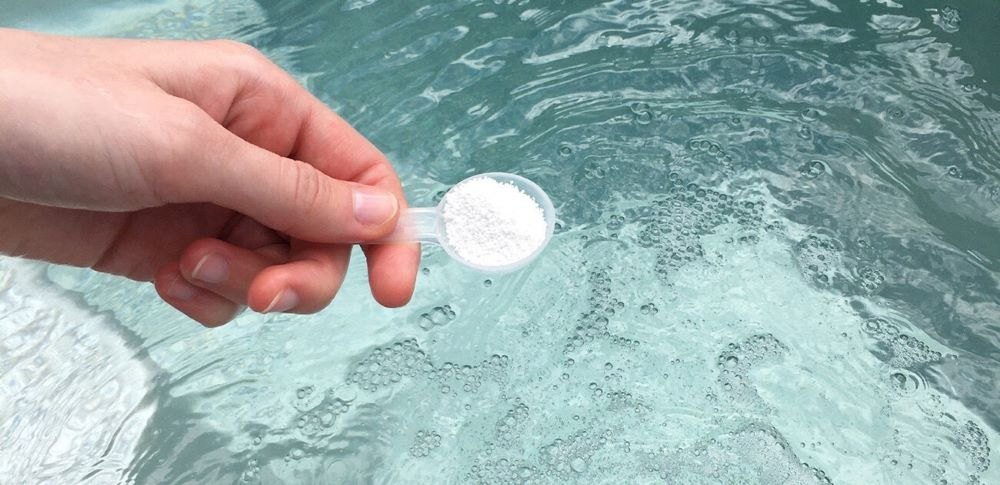
If you want it done and documented, a $45 water test and balance tests pH, alkalinity, sanitizer and hardness and leaves a written report.
How Often To Drain In Calgary
The baseline for a home tub is a drain every three to four months, which is also Sundance Spas Canada’s guidance. In hard water, I lean toward the shorter end of that range, and every three months at the minimum for a rental. A busy rental is monthly. The numbers in the City’s data are a reason to stay on schedule, not a reason to wait for the water to turn.
The schedule logic and cost are in how often to drain an Airbnb hot tub and how much a drain and refill costs in Calgary. A full drain, refill and balance is $200, or $175 on a plan.
Winter Changes The Plan
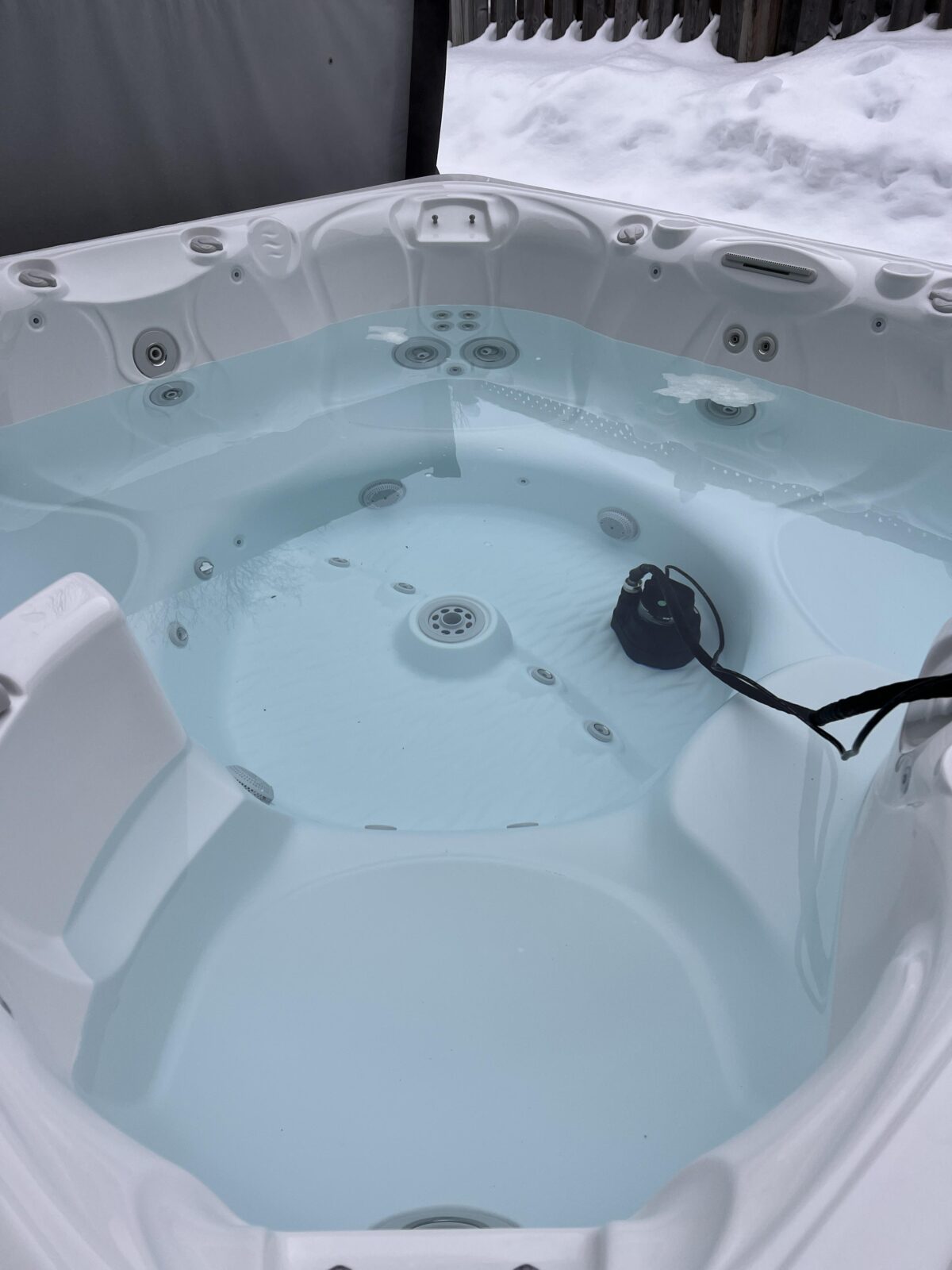
Calgary winters are hard on a tub that sits half managed. A cover that seals, heat that holds and water that is fresh going into the cold all matter. Cold fill water also takes longer to come back to temperature, and a drained tub should not sit empty in freezing weather. I wrote the checklist in winter hot tub care in Calgary.
By Quadrant
Every quadrant inside the city limits has its own page with the communities and access notes: northwest, northeast, southwest and southeast. If the water feels off, a drain and refill resets it, and a weekly plan keeps it there. Plans start at $279 a month. See the plans page.
Frequently Asked Questions
Is Calgary Tap Water Hard?
Yes. The City of Calgary reports hardness of 141 to 274 mg/L as calcium carbonate in its 2025 data, which is about 8.2 to 16.0 grains per US gallon.
How Hard Is Calgary Water By Treatment Plant?
In the 2025 City data, Bearspaw, which draws from the Bow River and serves the northern half of the city, reads 141 to 200 mg/L. Glenmore, which draws from the Elbow River and serves the south, reads 181 to 274 mg/L.
What Does Hard Water Do To A Hot Tub?
Calcium comes in with every fill and can form scale on the shell and heater, cloud the water and build up between drains. Fresh water resets it. Balancing alone does not remove it.
Why Is My Hot Tub Water Cloudy In Calgary?
Common causes are low sanitizer, out of range pH or alkalinity, a dirty filter, heavy use and high calcium from hard water. A test shows which, and a drain resets the calcium.
What Is The Right Calcium Hardness For A Hot Tub?
Pool and spa retailers commonly quote about 150 to 250 ppm, but manufacturers differ. Use the range in your manual.
How Do I Test My Fill Water?
Run the tap, fill a clean container and test calcium hardness, pH and alkalinity with a kit or strip. Record the numbers, because the City data varies by season.
How Often Should I Drain A Hot Tub In Calgary?
Every three to four months for a home tub, every three months at the minimum for a rental, and monthly for a rental booked most of the month. Hard water is a reason to stay on schedule.
Is The Chlorine In Calgary Tap Water Enough For A Hot Tub?
No. The City reports a free chlorine residual of 0.82 to 2.01 mg/L, which protects the pipes. A hot tub needs its own sanitizer, tested and maintained.
Which Water Treatment Plant Serves My Address?
The City says Bearspaw serves the northern half of Calgary and Glenmore the south, but the line is not a quadrant boundary. Ask the City for your address.
How Much Does It Cost To Reset Hot Tub Water In Calgary?
A full drain, refill and balance is $200 flat, or $175 for plan members. A $45 water test and balance corrects the numbers in the water you have.
Related Pages
- Hot tub drain and refill in Calgary
- Hot tub cleaning and water test
- Hot tub water chemistry order
- Winter hot tub care in Calgary
- Hot tub care plans